

Disabled refuge systems are a core part of a building’s evacuation strategy. When someone can’t leave independently during a fire or other emergency, the system gives them a direct, dependable way to speak to the people managing the response. Here’s what the equipment is, how it works in practice, and what UK guidance expects you to provide.
What is a disabled refuge unit?
A disabled refuge unit, sometimes called a remote or outstation, is one of the devices that sits on an Emergency Voice Communication System (EVCS). You’ll usually see them in protected lobbies and stair cores at refuge points. The unit provides hands-free, two-way communication between the person waiting and the operator at the EVCS master station.
That’s the point of the system. During an evacuation, lifts may be unavailable and stairs may be busy. A refuge unit means someone who needs assistance is not left isolated or guessing what happens next. They can speak to the operator, confirm their location, receive reassurance, and stay updated while help is arranged.

Who uses disabled refuge systems?
Despite the name, these systems are not only for people with permanent disabilities. They’re for anyone who, at that moment, needs assistance to evacuate safely. That includes wheelchair users, people with temporary injuries, someone in late pregnancy, or anyone who cannot use the main routes because conditions have changed.
The system doesn’t need to understand why someone needs help. It simply needs to work, clearly and consistently, every time.
What is a refuge area?
A refuge area is a designated place where someone can wait in relative safety while evacuation is coordinated. In most buildings that means a protected area, often within or adjacent to a protected stair enclosure, that offers a degree of fire protection and separation.
Guidance such as BS 8300-2 covers inclusive design and what a refuge should look like in practical terms. BS 5839-9 sets expectations for the emergency communication equipment provided at those points, while BS 9999 sets the standard for the wider fire safety design and management of the building. The intent is straightforward: a refuge must be usable, not symbolic.
How an EVCS fits together
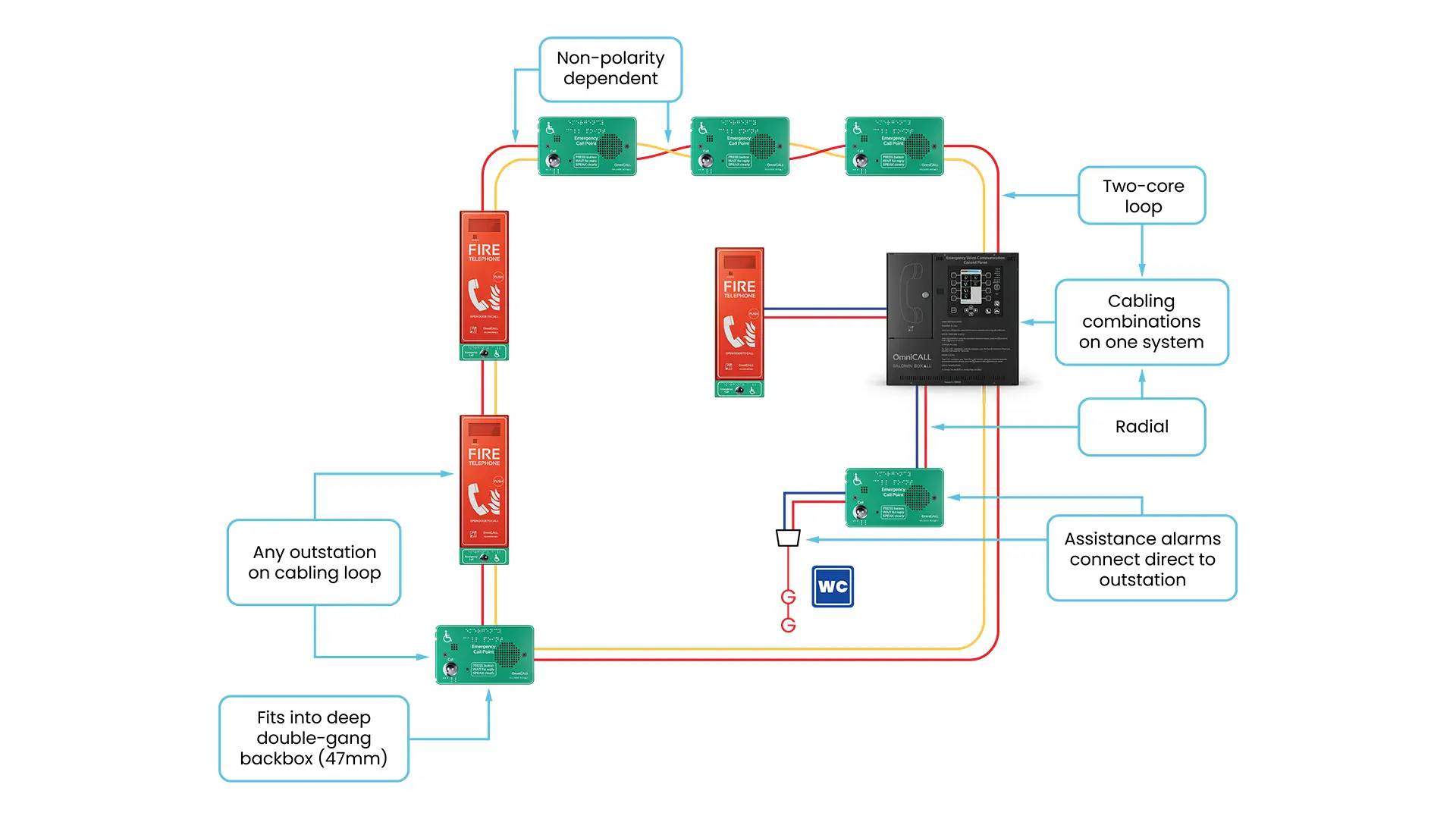
A disabled refuge system is typically one function within a wider EVCS. The EVCS is a monitored, battery-backed life-safety system designed specifically for use during evacuations. Alongside refuge units it can also support fire telephones, steward telephones and, where required, disabled toilet/assistance alarms, all connecting back to a central control point, typically referred to as a master station.
Battery backup matters here because fire incidents and power loss can go together. If the system fails when mains power is compromised, it isn’t doing its job.
The Master Station
The master station is the operational heart of the EVCS. It’s where calls come in and where responses are managed. Panels normally include a handset and a clear interface for selecting and answering calls, identifying which outstation is active, and managing communication across the building.
In an emergency, clarity beats cleverness. The operator needs to understand what’s happening quickly, respond with confidence, and keep communication flowing even under pressure.

Who the system is designed to support
In most buildings, an EVCS needs to work for three groups at once. It supports the people coordinating the evacuation at the start, whether that’s building management or trained staff. It supports fire and rescue crews when they arrive, providing a ready-made communication network across key points. And it supports the person waiting for assistance, giving them a reliable way to speak to someone in control of the situation.
When it’s designed properly, each group can use the system in a way that suits their role without relying on the same routes or the same assumptions.
Standards and what “compliant” should mean
BS 5839-9 is the key code of practice for EVCS design, installation, commissioning and maintenance. It’s the document that turns “we need refuge communications” into defined requirements around monitoring, fault reporting, standby power and device performance. BS 8300-2 is closely tied in because it addresses accessible building design, including how refuge provision should be approached. BS 9999 sits alongside these as broader fire safety guidance, including recommendations around evacuation strategies and the role of communications in supporting them.
If you’re specifying or managing an EVCS, it’s not enough to tick a box that says “refuge points provided”. The question to ask is whether the system will still perform when everything else is noisy, busy and uncertain.
How Baldwin Boxall approaches disabled refuge communications
Disabled refuge units are only as effective as the system behind them. At Baldwin Boxall, our EVCS platforms are built around monitored performance, clear intelligibility and straightforward operation, because that’s what matters when the building is under stress. Across our ranges, we support the outstation types expected for EVCS applications, including Type B refuge units, fire telephones, steward points and disabled toilet alarms, with scalable options depending on building size and topology.
If you’re planning a project and want to sense-check the right approach for refuge communications, we’ll talk it through properly, based on the building and the evacuation strategy, not a generic template.


