OmniCALL - Emergency Voice Communication System (EVCS)
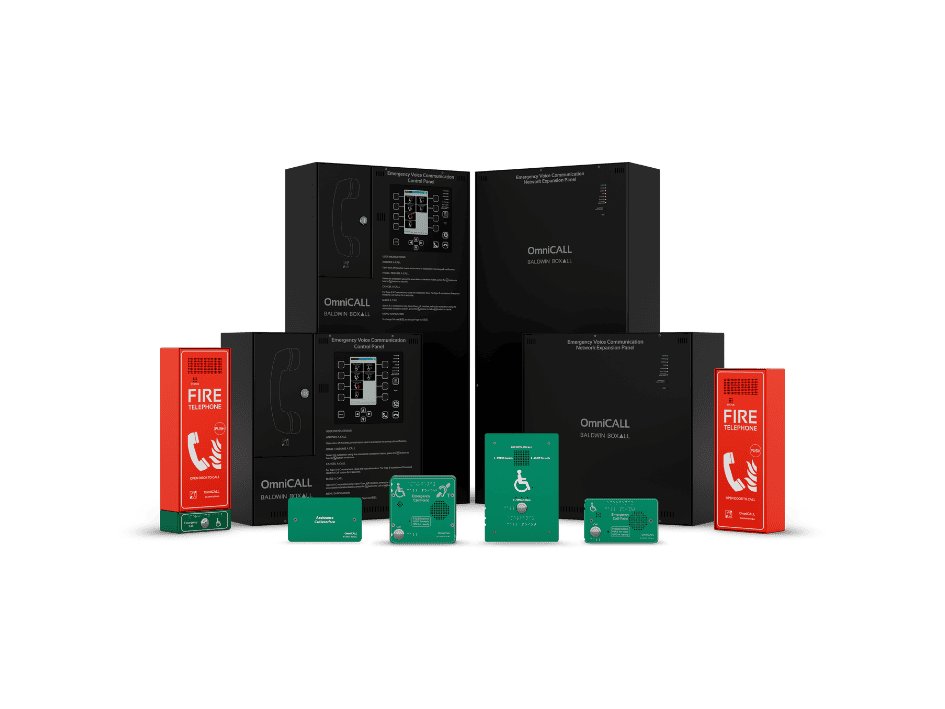
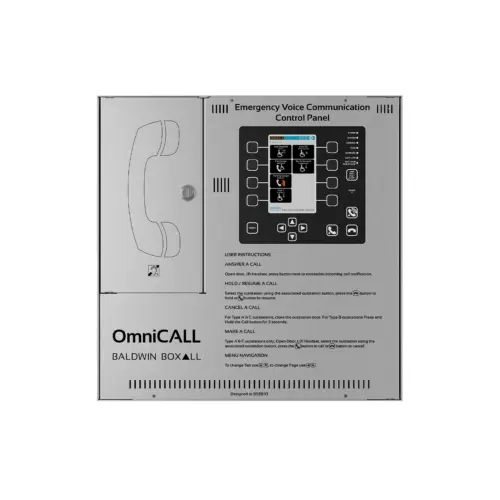
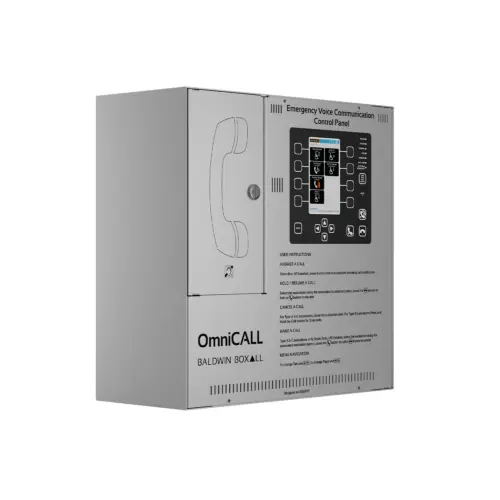
OmniCALL* is a fully monitored EVCS platform designed for clear, reliable communication during an emergency. It supports both loop and radial outstations within the same system and can be networked across large or multi‑building sites, providing a flexible and scalable solution for modern buildings.
*Protected by UK Patent GB2605125. Additional patents pending EP4302472.
OmniCALL is a modern Emergency Voice Communication System (EVCS) designed to provide clear, dependable communication between building occupants, building management and emergency services during an incident.
Built around a unique 2‑core architecture, OmniCALL supports both loop and radial outstations on the same system. This provides greater design flexibility than single-topology alternatives, while simplifying installation and reducing cabling requirements.
OmniCALL meets the requirements of BS 5839-9 and BS 8893, helping ensure that emergency communication systems remain compliant, reliable and easy to manage.
Flexible System Architecture
Unique 2‑core wiring architecture
Non-polarity-dependent wiring
Simplified installation with non-polarity-dependent wiring
Extended loop distances for easier system design
Networked System Capability
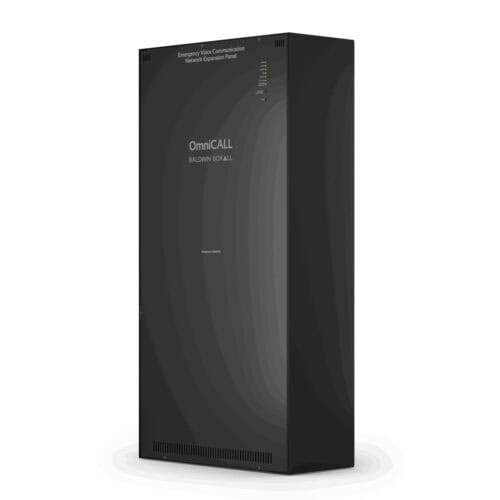
OmniCALL systems can be networked to support larger buildings, campuses or multi‑building developments. Networking allows multiple control panels and expansion panels to operate together as one integrated system.
Up to 100 OmniCALL panels can be networked
Typical system capacity of up to 512 outstations and 512 assistance alarms (for larger systems please talk to our team)
Copper networking for shorter distances
Optional fibre networking for long distance connections between buildings
Inclusive and Accessible Design
OmniCALL is designed with accessibility in mind, supporting refuge communication systems that allow people who cannot immediately evacuate to request assistance.
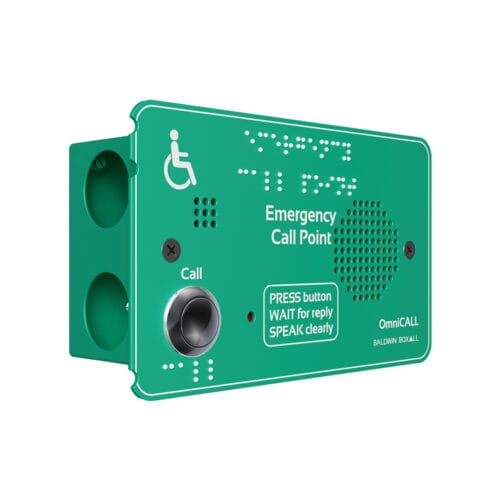
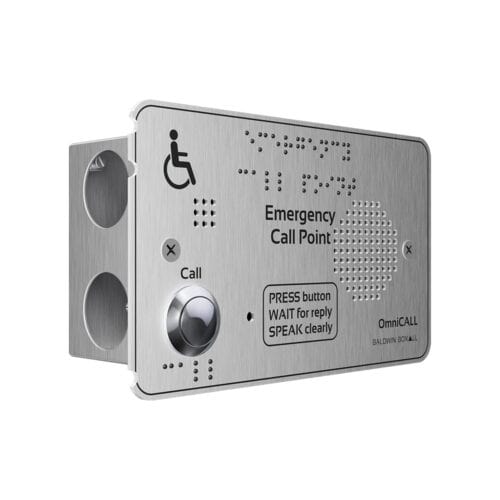
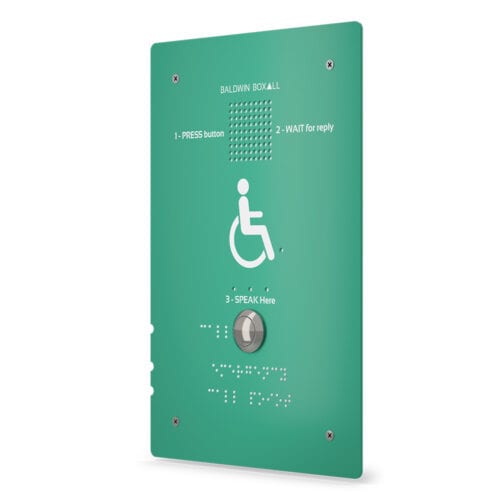
Disabled refuge outstations with Braille, luminescent labelling and induction loop facility
Hands-free communication for refuge areas
Assistance alarms, such as disabled toilet and accessible bedroom alarms, can be wired directly into refuge outstations
Assistance alarms are individually identified at the control panel
Clear and simple operation for occupants and responders
This allows assistance alarms to be integrated into the wider Emergency Voice Communication system without requiring separate monitoring equipment.
Designed for Modern Buildings
From commercial buildings and transport hubs to healthcare facilities and education campuses, OmniCALL provides a scalable platform that can grow with the needs of the building.
Fully monitored system operation
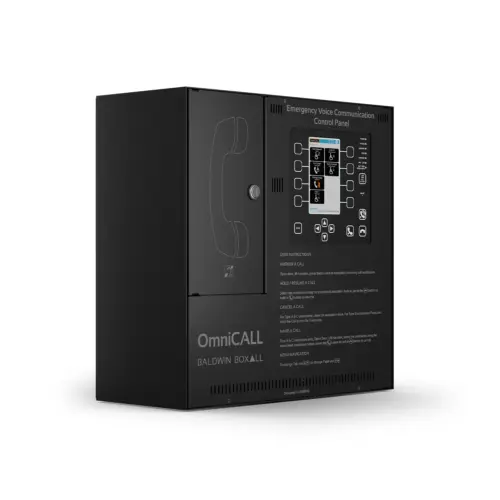
Touchscreen control interface
Expandable architecture for future system growth
Designed for reliability during critical situations
Clearest Audio
OmniCALL provides clear, effective communication and is designed so users can hear and be heard even in noisy challenging conditions.
EVC requirements rarely come down to one standard or one product choice. Learn more on the full OmniCALL EVC range and how Baldwin Boxall can support your project.
Search our full database of downloads and documentation
What is Emergency Voice Communication (EVC)?
Emergency Voice Communication systems provide two‑way communication between building occupants and a central control point during an emergency. EVC systems handle fire telephones, disabled refuge communication points, steward telephones and accessible alarms.
These systems allow people within the building to request assistance and allow emergency teams to coordinate response and evacuation more effectively.
Simple to install. Built for real buildings. Ready for the new standard.
OmniCALL* is shaped by the realities of modern construction and refurbishment. It keeps installation time low, works with challenging layouts and supports projects where downtime needs to stay minimal. The system is designed and manufactured in Britain and backed by long-term technical support.
*Protected by UK Patent GB2605125. Additional patents pending EP4302472.
Why choose OmniCALL?
Built for BS8893 and beyond
OmniCALL is designed for the latest EVC standards, including BS5839-9 and BS8300, and
is ready for BS8893 compliance. It supports both current requirements and the expectations
of future guidance.
Faster installation with 2-core wiring
The use of 2-core fire rated cabling reduces copper, lowers installation cost and makes
routing easier on site. It is well suited to busy buildings and retrofit projects where access is
limited.
Non polarity dependent connections
Terminations are non-polarity dependent. That cuts down on wiring errors, protects against
accidental damage and keeps commissioning time on schedule.
Loop and radial in one system
OmniCALL supports both loops and radials on the same Master Station. This helps with
awkward floorplates, phased work and partial system upgrades, without forcing a full rewire.
Clearest audio
OmniCALL provides clear, effective communication using full duplex Type A audio and speech steered Type B outstations. The system is designed so users can hear and be heard even in noisy or challenging conditions.
What are the benefits of having one system for loop and radial?
OmniCALL allows loop and radial outstations on the same Master Station. This simplifies design, gives more flexibility on site and makes it easier to extend or part-upgrade systems without starting again.
Does the 200 metre loop rule apply to OmniCALL?
No. There is no fixed distance limit between remote units, they can be placed anywhere on the loop. Total loop distance depends on the number of outstations, up to a maximum of 1.5 kilometres per loop.
What is the maximum number of outstations on a loop system?
A single loop can support up to 32 outstations plus 32 assistance alarm kits. An OCCPL Master Station supports up to 128 outstations and 128 assistance alarms across four loops or radials. The OCCPS variant supports up to 32 outstations and 32 assistance alarms across four loops or radials. Networked systems can reach 512 outstations (and more where required) and 512 assistance alarms.
What is the difference between 2-core and 4-core systems?
Traditional loop systems often use 4-core cable. OmniCALL uses 2-core fire rated cable for loops and radials. This halves copper use, cuts cable cost, reduces terminations and lowers the chance of polarity mistakes. It can also make it easier to reuse existing cabling when replacing earlier Baldwin Boxall ranges or existing two core loop and radial systems.
Does OmniCALL require a separate battery enclosure?
No, the OmniCALL master station and network expansion panels have been designed to have batteries for 24 hours quiescent (plus 3 hours operation) within the enclosures. Please speak to our team if you require longer battery back up.
What outstation connections are supplied with the master stations as standard?
Both the OCCPS and OCCPL master stations are fitted with one line card which provides either one loop connection or four radials. Optional line cards are supplied with each providing either one loop or four radial connections. Each master station can be fitted with three additional line cards.
Start typing and press enter to search
Manage Consent
To provide the best experiences, we use technologies like cookies to store and/or access device information. Consenting to these technologies will allow us to process data such as browsing behaviour or unique IDs on this site. Not consenting or withdrawing consent, may adversely affect certain features and functions.
Functional
Always active
The technical storage or access is strictly necessary for the legitimate purpose of enabling the use of a specific service explicitly requested by the subscriber or user, or for the sole purpose of carrying out the transmission of a communication over an electronic communications network.
Preferences
The technical storage or access is necessary for the legitimate purpose of storing preferences that are not requested by the subscriber or user.
Statistics
The technical storage or access that is used exclusively for statistical purposes.The technical storage or access that is used exclusively for anonymous statistical purposes. Without a subpoena, voluntary compliance on the part of your Internet Service Provider, or additional records from a third party, information stored or retrieved for this purpose alone cannot usually be used to identify you.
Marketing
The technical storage or access is required to create user profiles to send advertising, or to track the user on a website or across several websites for similar marketing purposes.