




What is an Emergency Voice Communication (EVC) System?

An Emergency Voice Communication (EVC) system is a fixed, monitored, two-way communication network that links a master station with people throughout a building during a fire or evacuation. It covers disabled refuge call points, fire/steward telephones, and  assistance alarm communications in one governed life-safety system

YEAR WARRANTY 7

What does an EVC system do?

When a fire alarm activates, the evacuation plan relies on more than stairwells and exits. People waiting in a disabled refuge area need a way to call for help and get reassurance that they’ve been heard. In venues with managed or phased evacuation, occupiers need reliable communications while the building is being evacuated. An EVC system provides that link.

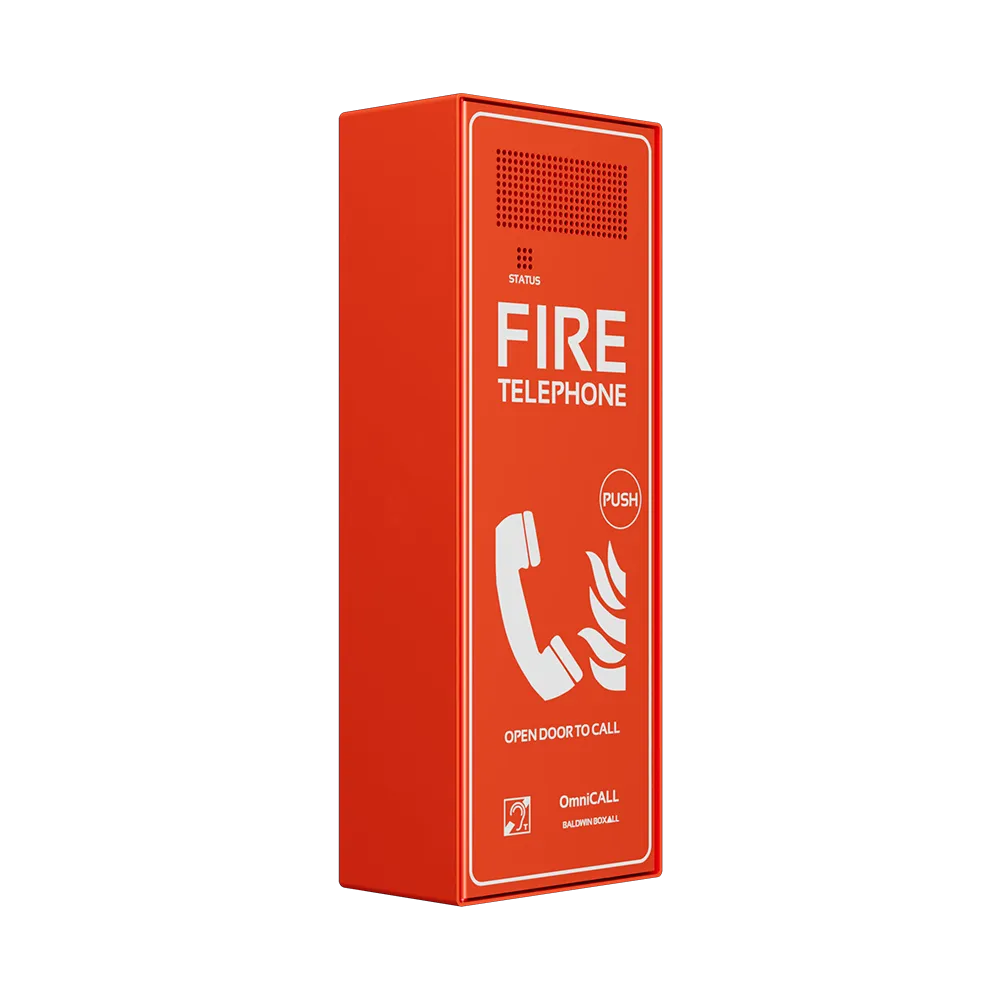
A typical system connects a Master Station, usually at the main entrance, fire control room or firefighting lobby, to outstations installed around the building. Any outstation can initiate a call. The Master Station identifies where the call is coming from, the operator answers, and two-way speech is established. At a disabled refuge point the call is hands-free, so the person calling doesn’t need to hold a handset.

EVC systems run on monitored fire rated cable with a battery-backed power supply. If mains power is lost, the system stays operational. That resilience is why EVC is treated as a distinct life-safety system, not part of general building services.

A single EVC installation can cover disabled refuge calls, fire/steward telephone communications, emergency assistance alarms communications from one master station, with each call type clearly identified.

Who needs an EVC system?

In most cases, multi-storey buildings that aren’t single-occupancy dwellings will need EVC provision. The exact scope depends on building type, occupancy and the evacuation strategy set by the person responsible.

EVC systems are governed by BS 5839-9, but it doesn’t sit in isolation. Requirements for disabled refuges and fire telephones are driven by the wider building fire strategy and the guidance used on the project.

If your building has more than one storey, relies on stair evacuation, and is used by members of the public, students, tenants or residents, an EVC system is usually part of the answer. Offices, education, healthcare, hotels, residential blocks, retail, stadia and most public buildings fall into that category.

There’s also a practical duty behind the technical detail. Building owners and occupiers are expected to make reasonable provision for everyone using the building. Properly sited disabled refuge points, connected to a monitored EVC system, are a key part of delivering that in multi-storey buildings.

What’s in an EVC system?

A complete Emergency Voice Communication System (EVCS) installation is made up of several distinct parts, each with its own placement and performance requirements.

OmniCALL - Redefining Emergency Voice Communication

Redefine emergency voice communication safety standards with OmniCALL, Baldwin Boxall’s groundbreaking innovation in Emergency Voice Communication (EVC).

Where EVCS are typically used

The principles don’t change: two-way communication, monitored wiring, battery backup and clear call identification at the Master Station. What does change is the scale of the system, the wiring approach and the mix of outstation types required by the evacuation strategy.

Standards & Regulations

EVC systems sit across fire safety, accessibility and product performance. The important point is not simply naming a standard, but making sure the design and the equipment work together as a complete system, and that the testing and maintenance regime is understood from day one.

Speak with an EVC system expert today.

BS 5839-9

Code of practice for the design, installation, commissioning and maintenance of Emergency Voice Communication systems. The baseline standard for any UK EVC installation.

BS 8893

Requirements and test methods for EVC system components. OmniCALL is ready for BS 8893:2024.

BS 9999 & BS 9991

BS 9999 covers non-residential buildings; BS 9991 covers residential. Together they define when and where disabled refuges and fire telephones are required.

Equality Act 2010

Building owners and occupiers are expected to make reasonable provision for everyone using the building. A properly specified EVC system is how that duty is discharged in multi-storey buildings.

Approved Document B

Building Regulations guidance for fire safety in England. Specifies EVC provision in buildings where stair-dependent evacuation applies.

BS 8300-2

Specifies usage for emergency assistance alarms.

EN62368-1

Audio/video, information and communication technology equipment - Safety requirements.

EN50130-4

Alarm systems - Electromagnetic compatibility. Product family standard: Immunity requirements for components of fire, intruder, hold up, CCTV, access control and social alarm systems.

Knowledge Hub

To learn more about Emergency Voice Communication, explore our supporting blogs and articles.

Industry Insights

The Role of Emergency Voice Communication (EVC) in Residential Evacuation Strategies

Residential buildings don’t evacuate like workplaces. People are dispersed, often behind closed doors. Some are asleep. Some are visitors who don’t know the layout. Many ...
Read More
Abraham Darby Leisure Centre, Ironbridge Road, Madely, Telford, Shropshire, England, United Kingdom News

OmniCALL Launches: First Installations Successfully Completed

The latest addition to the Baldwin Boxall product EVC ranges, OmniCALL offers two-core, non-polarity dependent cabling and either loop or radial wiring on one system. ...
Read More
Industry Insights

What Are Disabled Refuge Systems?

Disabled refuge systems are a core part of a building’s evacuation strategy. When someone can’t leave independently during a fire or other emergency, the system ...
Read More
News

OmniCALL, simple, scalable networking for emergency voice communication

Networking should support the system, not complicate it. With OmniCALL, building a simple, scalable emergency voice communication network is exactly that: simple. Whether you’re fitting ...
Read More
Product News

OmniCALL: A Voice Communication System Built for Growth

OmniCALL. Built to Grow. When we launched OmniCALL last year, it marked the first phase of a new Emergency Voice Communication System (EVCS). Since then, ...

Read More

Supporting your EVCS specification

EVC requirements rarely come down to one standard or one product choice. Learn more on the full OmniCALL EVC range and how Baldwin Boxall can support your project.

Our Revolutionary New EVC System

OmniCALL

Streamline protocols with unmatched connectivity, versatility, and sustainability.